

Art organisations play an important role in creative communities. They are tools in the development of the arts and provide artists with a platform for opportunity and support. The initiatives implemented by these organisations enable artists to practice their respective art forms and sustain a career within the sector.
The BOM Talent Search (Pty) Ltd. is a black-owned company, founded in 2015 by Sydney Qoqonga. In 2022, BOM Talent Search was granted funds from the National Arts Council’s Art Organisation Support Fund (AOSF), a 3-year funding for art organisations available for South African arts organisations with a record of good track governance. Over the 3 years, the organisation implemented BOM creatives@work, an annual project mainly based in the Eastern Cape that seeks to promote, market, and showcase visual and performance art forms.
The objectives of the project are to discover young, marginalised, and/or disadvantaged artists with untapped Indigenous artistic talents, package and offer various art skills development programmes, and assist these artists in creating and developing their artistry so that they have access to markets and an opportunity for a sustainable career. Objectives also include the introduction and incorporation of technologically advanced devices and platforms that enhance artists’ careers. With a focus on youth, women, and people living with disabilities, BOM Talent Search also aims to promote social cohesion by building valuable relationships and solidarity within art communities.
To achieve these objectives, the organisation intends and continues to identify and develop existing artistic markets that expose artists to the sector and form partnerships with public and private sector stakeholders, which allows BOM Talent Search to provide a larger platform for opportunities. Thus far, some of these collaborative partnerships included various Eastern Cape Municipalities and TVET Colleges, the South African Local Government Association (SALGA), the South African Police Services (SAPS), Vodacom, Universal Music Group, Yamaha, SA Chefs Association, Daily Dispatch, Eastern Cape Audio Visual Centre (ECAVC), College Sport, Arts and Culture of South Africa (CoSACSA), Standard Bank, Guild Theatre, the South African Roadies Association (SARA) and many other prominent industry based players.
This year, the annual BOM creatives@work project began with externally sourcing workers from existing artistic databases to create a production team. Through this, BOM Talent Search was able to establish its database of artists for future projects and initiatives. The organisation then held a 3-month development and rehearsal boot camp for the artists to develop skills, get coached on their craft and rehearse their performances.
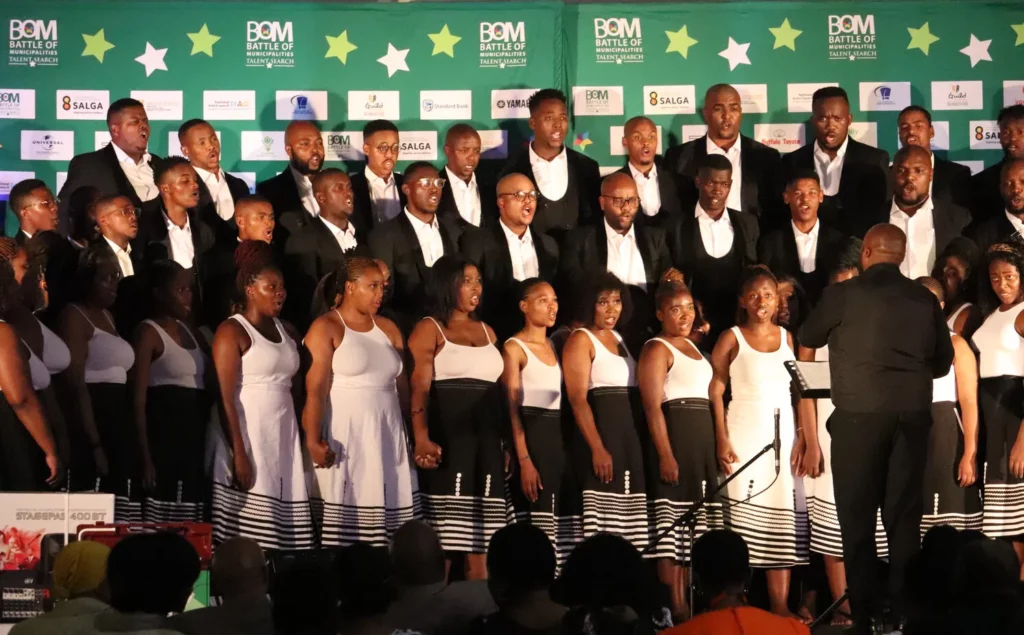
The BOM Finale Performance and Exhibition Showcase was held over 3 days at the ICC in East London, starting with the BOM Stakeholder Engagement Gala Dinner. The dinner was an opportunity for the project’s various partners and stakeholders to network, engage and learn more about the ecosystem and functionality of the BOM Talent Search organisation. The gala included music and dance performances, celebrating 30 years of democracy and highlighting legendary icons that played a meaningful role in the liberation struggle. The second day saw the project’s various partners and stakeholders, who were invited to partake in a business conference, come together. This included panel discussions and exhibitions that detailed many services and opportunities for artists. The last day was dedicated to a performance showcase of all the participating artists.
With the financial support of the National Arts Council, the BOM Talent Search successfully achieved its ongoing project objectives and identified itself as a sustainable and valuable organisation. Additionally, a total of 40 creatives were employed in the project implementation. The organisation’s founder, Sydney Qoqonga, wrote, “The project has made a significant change in the lives of artists and their communities. The beneficiaries were able to earn a living through the project, as many of them performed various roles. The majority of these artists have acquired a lot of industry skills and knowledge. Local businesses were allowed to render their services and provide support in local communities.”
